New Digital Resource: Index of Annual Exhibition Jurors (1882–1969)

The Archives is happy to announce a new digital research tool: the Index of Annual Exhibition Jurors. This resource provides a centralized, searchable record of the jurors who shaped one of the most significant exhibition series in American art history.

From the inception of the juried system in the late 19th century through the final annual in 1969, the information provide valuable research details for researchers, curators, and historians tracing the evolution of American taste and institutional standards.
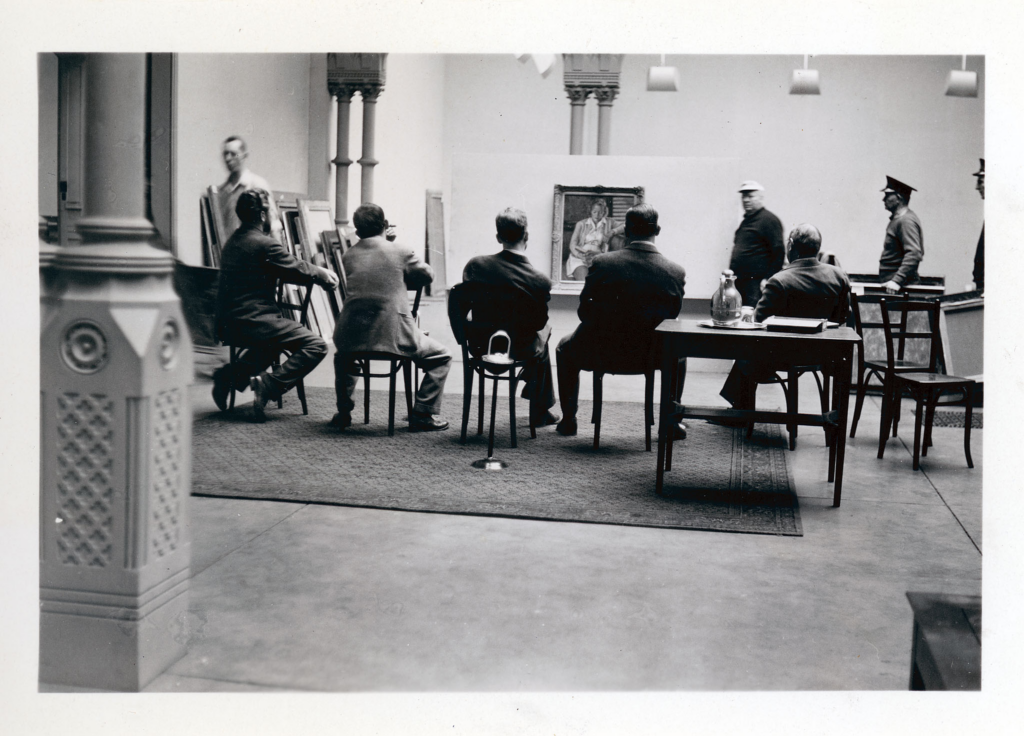
1942 Annual Exhibition Jurors (PC0104_1942_003)

Access the Resource: Index of Annual Exhibition Jurors

Key Research Data & Insights

The database allows for a granular analysis of PAFA’s institutional decision-making. Initial findings from the data reveal several significant trends:

  • Institutional Influences: The records document the recurring involvement of important Academy instructors, including Thomas Eakins, Cecilia Beaux, William Merritt Chase, Thomas Anshutz, Hugh Breckenridge, and Charles Grafly.
  • Specialized Jury Structures: The data tracks the professionalization of the jury system, ranging from “Hanging Juries” responsible for gallery aesthetics to specialized committees for Painting, Sculpture, and Architectural Drawings.
  • Geographic Reach: Documentation of regional juries in St. Louis, Chicago, Cleveland, and Indianapolis demonstrates the Academy’s historical role as a national arbiter of fine arts.
  • Gender and Professional Status: Researchers can track the increasing—though initially limited—inclusion of women in leadership and jury roles, providing a metric for shifting professional standards in the early 20th century.

Why This Matters for Scholarship

The Annual Exhibitions at PAFA brought over 100,000 works of art to the public. By making the names and roles of the jurors accessible, we provide the “missing link” in provenance and exhibition history research. Understanding who selected the art is as vital as knowing which art was shown.

This digital resource reduces the need for manual catalog searches, streamlining the workflow for provenance researchers and academic historians.
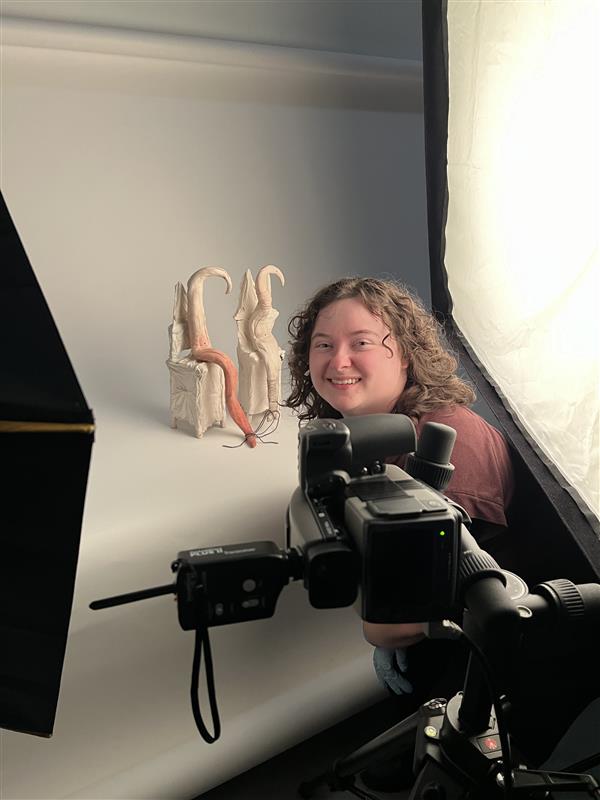
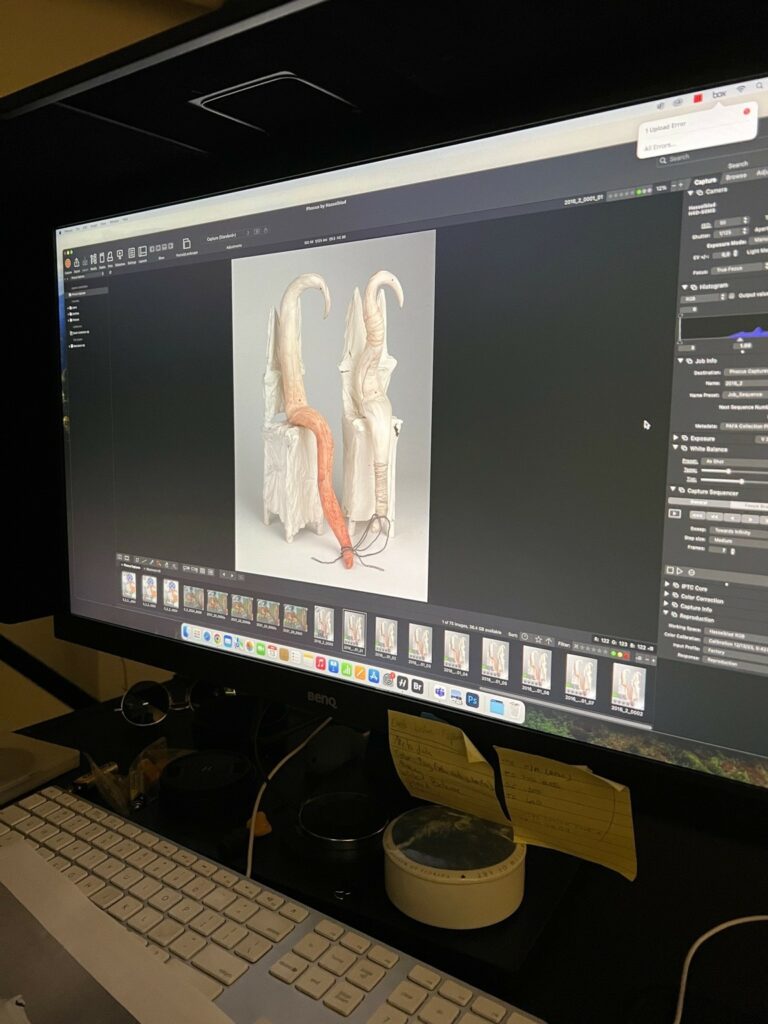
Behind the Scenes: Photographing Unique 3D Objects

Contributed by Sharon Yoon, Collections and Technical Services Assistant and Zoe Smith, Digital Studio Technician

Digitizing museum objects is a core function of collections management. High-quality imaging supports scholarly research, facilitates exhibition planning, and provides greater access. By adhering to rigorous post-processing standards, the Academy ensures that visual records remain viable for long-term digital preservation.

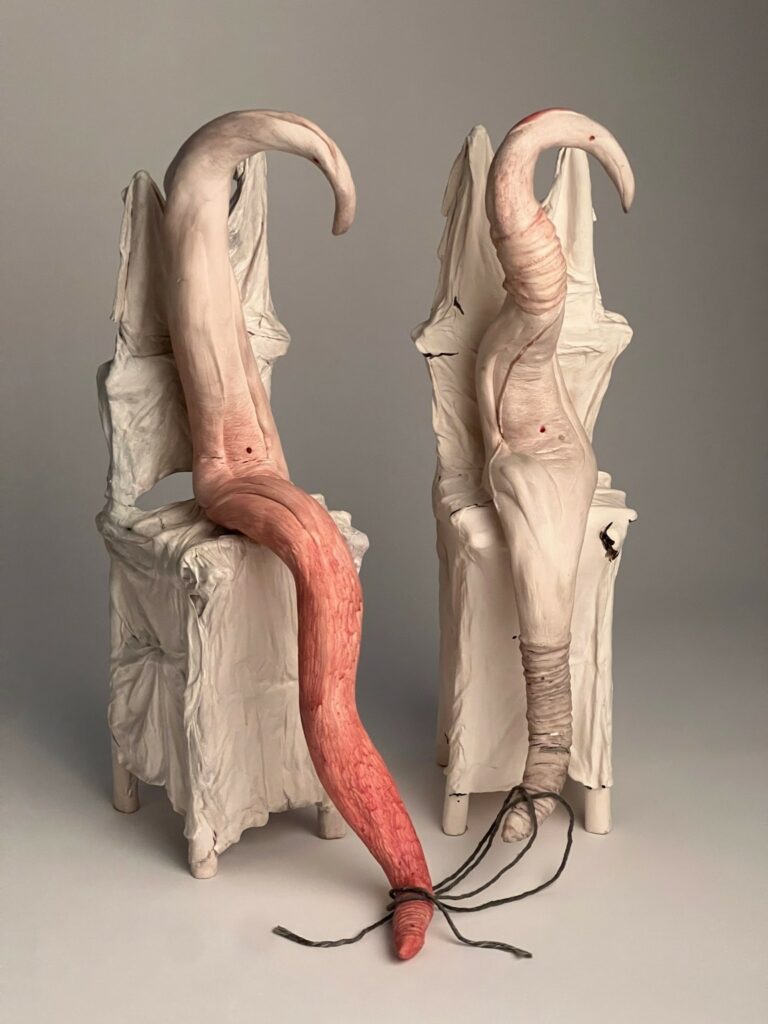
Case Study: Linda Kramer, The Prisoners of Love, 1982. Porcelain china painted, 22 x 14 x 12in. Funds provided by Robert and Frances Coulborn, 2016.2

Photographing complex, multi-part objects requires technical precision balanced with stringent handling protocols. The work by Linda Kramer consists of four distinct, delicate porcelain components. Due to their fragile, irregular geometry and lack of independent stability, the session required a coordinated workflow between the photographer and the collections team.

Workflow

  • Pre-Capture Verification: Each component was positioned according to archival reference photos to ensure the artist’s original intent was maintained.
  • Staged Handling: Transfers and rotations were executed with deliberate, slow-motion to mitigate the risk of damage.
  • Lighting and Surface Analysis: Lighting was configured specifically to highlight sculptural depth and ceramic surface texture without overexposure.
  • Real-Time QC: Images were tethered to a workstation for immediate review, allowing for instantaneous adjustments to focus and exposure.

Data Integrity and Post-Processing

Following the physical session, the files underwent a standardized post-processing phase:

  • Color Calibration: Accurate color representation was verified against physical color targets.
  • Master File Archiving: High-resolution TIFF files were generated as the preservation masters.
  • Access Derivatives: Web-ready copies were created for the Academy’s internal databases and digital platforms.

Impact

This process represents a critical intersection of documentation and stewardship. Each digital surrogate allows the work to be studied and shared without the physical risk associated with repeated handling of the original media.

European Roots of America’s First Art Academy

Contributed by Sharon Yoon, Collections and Technical Services Assistant

In the early 19th century, the Pennsylvania Academy of the Fine Arts (Academy) functioned as a vital conduit for transatlantic cultural exchange. For a young nation lacking established museums or classical ruins, these early acquisitions provided the essential technical infrastructure required to train American artists before a native artistic identity had fully emerged.

The Napoleonic Gift (1810)

In 1810, a significant diplomatic exchange occurred between the French Empire and the United States. John Armstrong Jr., the American Ambassador to France, received a collection of books and engravings from Napoleon Bonaparte, delivered via the Duke of Cadore.

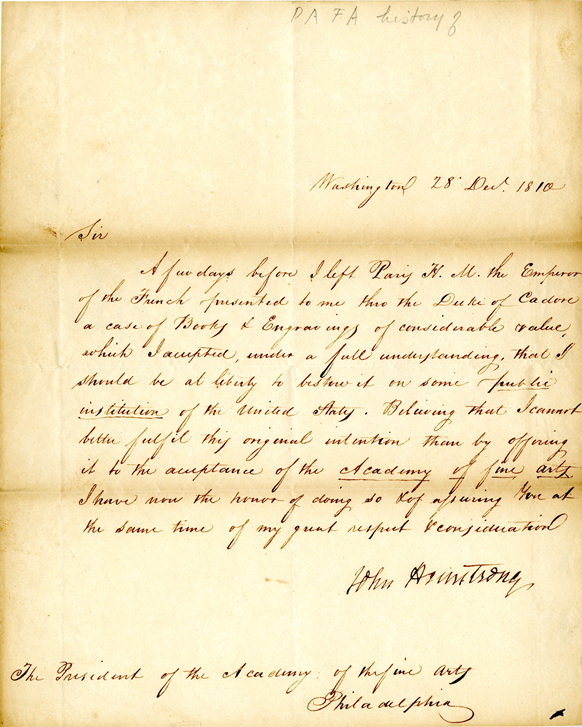
Armstrong recognized the pedagogical value of these materials for a young art institution. In a letter dated December 28, 1810, he formally offered the collection to Academy President George Clymer:

“Believing that I cannot better fulfil this original intention than by offering it to the acceptance of the Academy of Fine Arts, I have now the honor of doing so…”

Washington 28 Dec. 1810

Sir

A few days before I left Paris H. M. the Emperor of the French presented to me thro’ the Duke of Cadore a case of Books & Engravings of considerable value, which I accepted under a full understanding, that I should be at liberty to bestow it on some public institution of the United States. Believing that I cannot better fulfil this original intention than by offering it to the acceptance of the Academy of Fine Arts, I have now the honor of doing so and of assuring you at the same time of my great respect and consideration.

John Armstrong

The President of the Academy of the Fine Arts

Philadelphia

This gift comprised 24 volumes of etchings by Giovanni Battista Piranesi and his family. These detailed renderings of Roman architecture became primary teaching resources, allowing Academy students to study classical proportion and perspective without traveling abroad.

The Smith Donation and International Law (1813)

The Academy’s instructional library and collection were further expanded in 1813 by a major gift from Joseph Allen Smith, consisting of paintings, plaster casts, and engravings.

The provenance of this collection is a landmark in international law. During the War of 1812, the ship transporting Smith’s gift was seized by the British as a “war prize.” However, a Nova Scotia Vice-Admiralty Court eventually ordered the cargo’s release. The ruling established a global precedent: that cultural and scientific property are exempt from the rights of warfare—a principle that remains a cornerstone of international art law today.

For more information on the ship seized by Britain:

A Legacy of Modern Scholarship

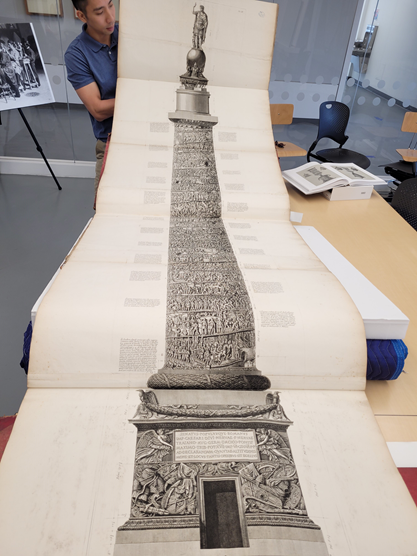
Together, the Napoleon and Smith gifts provided the intellectual capital necessary for America’s first art academy. These resources remain active assets for modern scholarship. Recently, researcher Stephen Lauf consulted the Piranesi volumes to advance his research on 18th-century printmaking and architectural history. Such collaborations continue to generate new insights into the Academy’s foundational holdings. His multiple visits to the archive were a delight to staff and sparked multiple interesting conversations on the works, processes, and history of the Piranesi family etchings. Thanks to Lauf, Academy staff also walked away from his visits with new knowledge and insights into the volumes.

Director of Archives, Library, & Collections Hoang Tran unfolding Trajan’s Column!
Photo courtesy of Stephen Lauf

For more information on Lauf’s interesting research, please visit his website: https://www.quondam.com/index.htm

Through the preservation of these imperial and diplomatic gifts, the Academy ensures that the fundamental resources that shaped the first generations of American artists remain accessible to inspire the next.

Digital Treasure Trove: Ongoing 16-Bit Photography

Contributed by PAFA Museum Collection

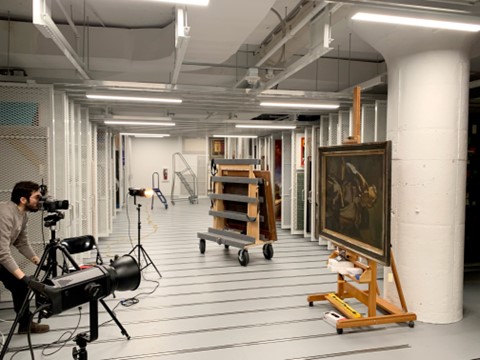
Digitization continues this month here at PAFA. With a permanent collection as large as ours, and with storage and exhibition space spread out across multiple sites and buildings, we need to be flexible, and it keeps us on the move. Currently, we are set up in one of our controlled storage facilities where a large number of our framed paintings are held on storage racks. We have between 150 to 200 works to photograph (or re-photograph) in high resolution, or 16-bit image depth, for future record keeping and image licensing. Not all, but many of the works we have recently photographed coincidentally included those from the Museum’s current exhibition, Making American Artists: Stories from the Pennsylvania Academy of the Fine Arts, 1776–1976.

PAFA Collections photographing the work Dr. Jean Piccard (1946), by Raymond Breinin, 48 1/8 x 37 1/8 in. (122.2 x 94.3 cm.), 1948.2, Joseph E. Temple Fund

About the Institute of Museum and Library Services

The Institute of Museum and Library Services is the primary source of federal support for the nation’s libraries and museums. We advance, support, and empower America’s museums, libraries, and related organizations through grantmaking, research, and policy development. Our vision is a nation where museums and libraries work together to transform the lives of individuals and communities. To learn more, visit https://www.imls.gov/and follow us on Facebook and Twitter.