Contributed by Sharon Yoon, Collections and Technical Services Assistant and Zoe Smith, Digital Studio Technician
Digitizing museum objects is a core function of collections management. High-quality imaging supports scholarly research, facilitates exhibition planning, and provides greater access. By adhering to rigorous post-processing standards, the Academy ensures that visual records remain viable for long-term digital preservation.
Case Study: Linda Kramer, The Prisoners of Love, 1982. Porcelain china painted, 22 x 14 x 12in. Funds provided by Robert and Frances Coulborn, 2016.2
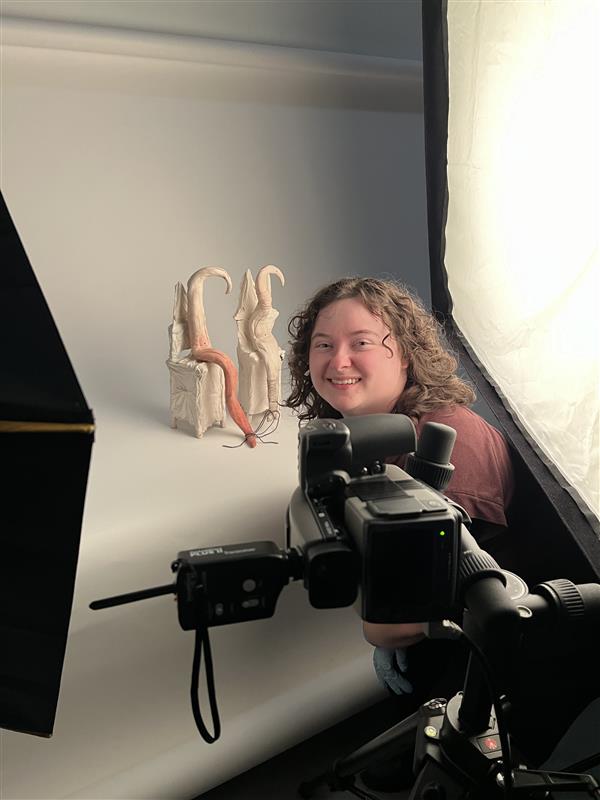
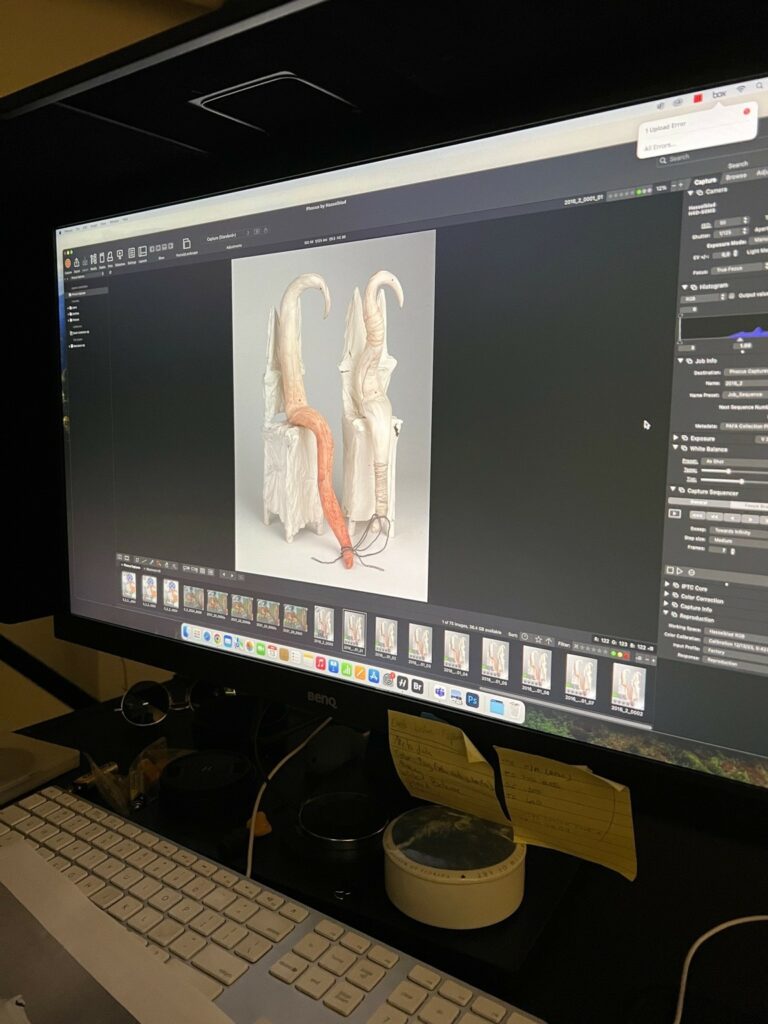
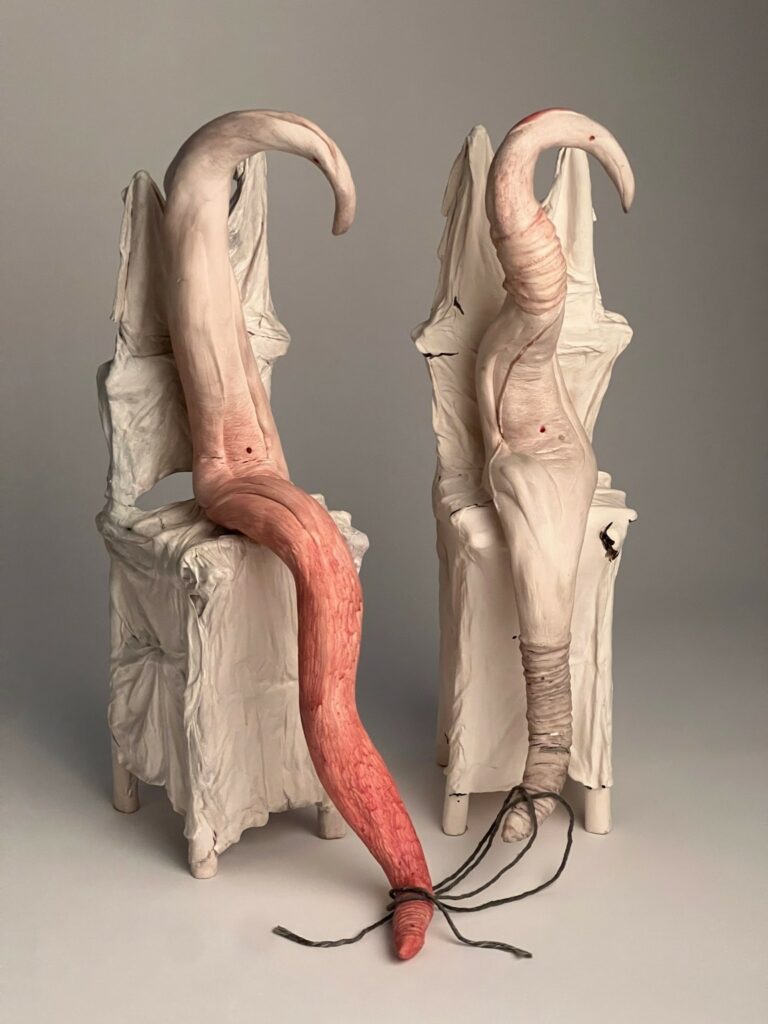
Photographing complex, multi-part objects requires technical precision balanced with stringent handling protocols. The work by Linda Kramer consists of four distinct, delicate porcelain components. Due to their fragile, irregular geometry and lack of independent stability, the session required a coordinated workflow between the photographer and the collections team.
Workflow
- Pre-Capture Verification: Each component was positioned according to archival reference photos to ensure the artist’s original intent was maintained.
- Staged Handling: Transfers and rotations were executed with deliberate, slow-motion to mitigate the risk of damage.
- Lighting and Surface Analysis: Lighting was configured specifically to highlight sculptural depth and ceramic surface texture without overexposure.
- Real-Time QC: Images were tethered to a workstation for immediate review, allowing for instantaneous adjustments to focus and exposure.
Data Integrity and Post-Processing
Following the physical session, the files underwent a standardized post-processing phase:
- Color Calibration: Accurate color representation was verified against physical color targets.
- Master File Archiving: High-resolution TIFF files were generated as the preservation masters.
- Access Derivatives: Web-ready copies were created for the Academy’s internal databases and digital platforms.
Impact
This process represents a critical intersection of documentation and stewardship. Each digital surrogate allows the work to be studied and shared without the physical risk associated with repeated handling of the original media.
