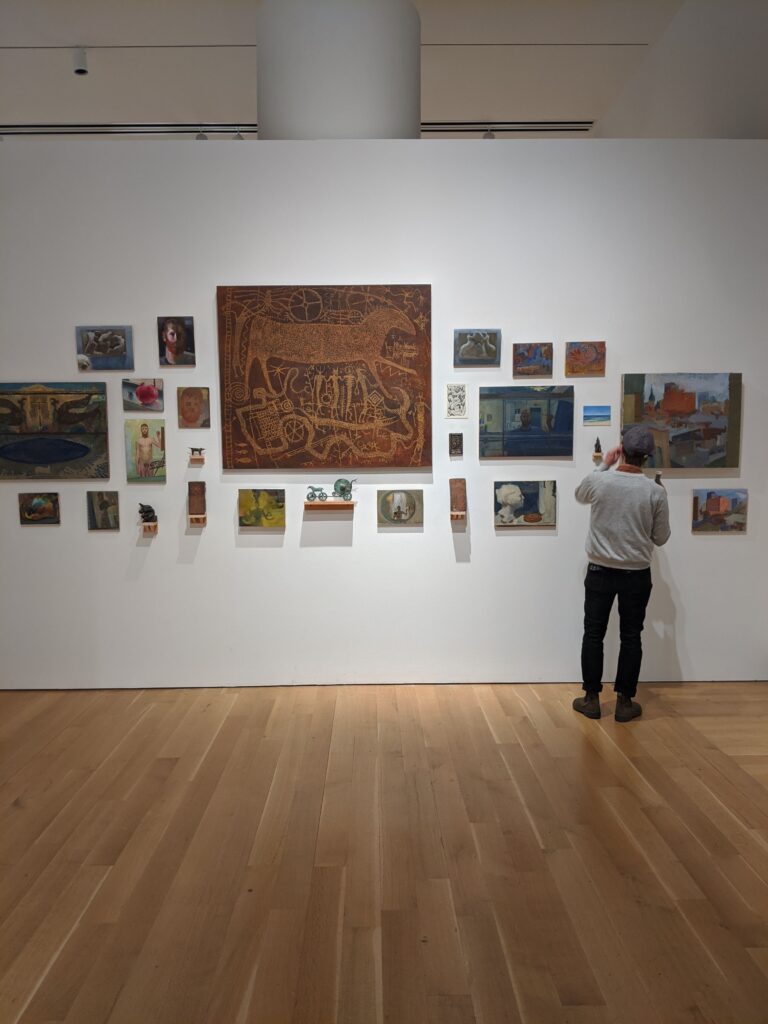
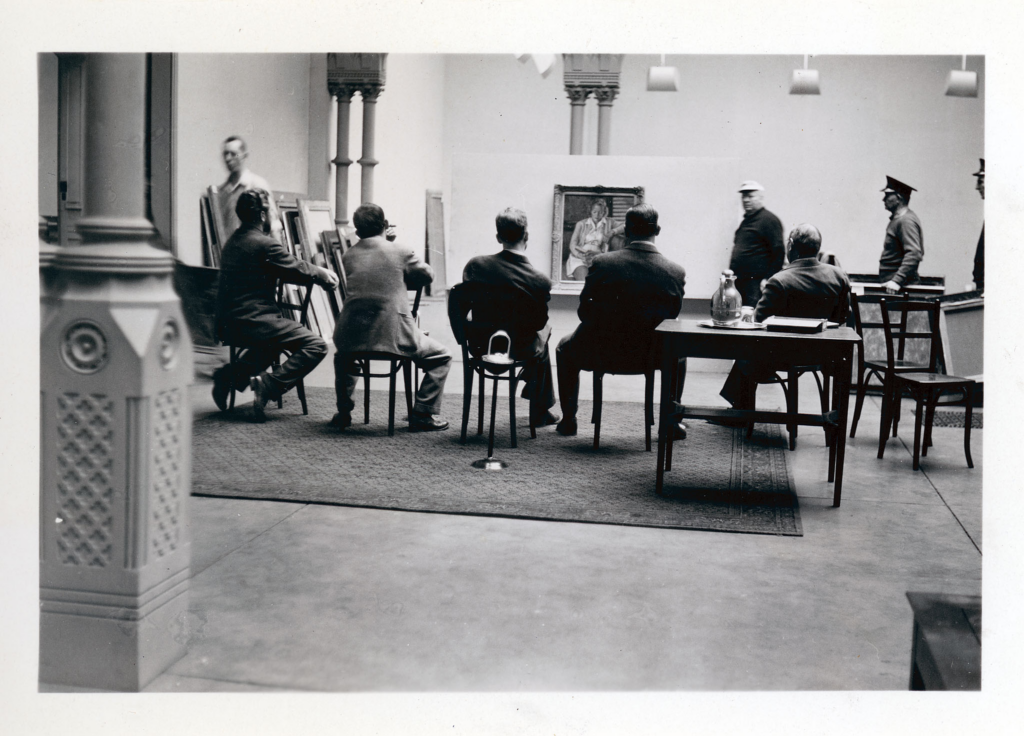
The Archives is happy to announce a new digital research tool: the Index of Annual Exhibition Jurors. This resource provides a centralized, searchable record of the jurors who shaped one of the most significant exhibition series in American art history.
From the inception of the juried system in the late 19th century through the final annual in 1969, the information provide valuable research details for researchers, curators, and historians tracing the evolution of American taste and institutional standards.
Access the Resource: Index of Annual Exhibition Jurors
Key Research Data & Insights
The database allows for a granular analysis of PAFA’s institutional decision-making. Initial findings from the data reveal several significant trends:
- Institutional Influences: The records document the recurring involvement of important Academy instructors, including Thomas Eakins, Cecilia Beaux, William Merritt Chase, Thomas Anshutz, Hugh Breckenridge, and Charles Grafly.
- Specialized Jury Structures: The data tracks the professionalization of the jury system, ranging from “Hanging Juries” responsible for gallery aesthetics to specialized committees for Painting, Sculpture, and Architectural Drawings.
- Geographic Reach: Documentation of regional juries in St. Louis, Chicago, Cleveland, and Indianapolis demonstrates the Academy’s historical role as a national arbiter of fine arts.
- Gender and Professional Status: Researchers can track the increasing—though initially limited—inclusion of women in leadership and jury roles, providing a metric for shifting professional standards in the early 20th century.
Why This Matters for Scholarship
The Annual Exhibitions at PAFA brought over 100,000 works of art to the public. By making the names and roles of the jurors accessible, we provide the “missing link” in provenance and exhibition history research. Understanding who selected the art is as vital as knowing which art was shown.
This digital resource reduces the need for manual catalog searches, streamlining the workflow for provenance researchers and academic historians.