The “Genius” Alumna

Contributed by Hoang Tran, Director of Archives

PAFA Alumna Njideka Akunyili Crosby was announced as one of the winners of the prestigious 2017 MacArthur Fellowship, otherwise known as the “Genius Grant.” In honor of the award, PAFA has hung her monumental two panel work, I Always Face You, Even When it Seems Otherwise. Now on View in the Samuel M.V. Hamilton Building at PAFA.

20171026_001

20171026_002

It took extra hands to hang such a large work. Our Team consisted of Liz McDermott, Michael Gibbons, Mark Knobelsdorf, and myself.

The MacArthur fellowships are awarded annually by the John D. and Catherine T. MacArthur Foundation to extraordinarily creative people who inspire the masses.

Critical Observation // Art Appreciation

Contributed by: Hoang Tran, Director of Archives

PAFA’s collection of prints, drawings, miniatures, photographs, sketchbooks, and illustrated books contains over 13,000 American works on paper, dating from the 18th century to the present day. Works of art on paper are by nature delicate objects that can be irreparably damaged from cumulative exposure to light. As a result, PAFA can only display these works for short periods of time, and then only in low levels of light to guarantee their preservation for future generations.

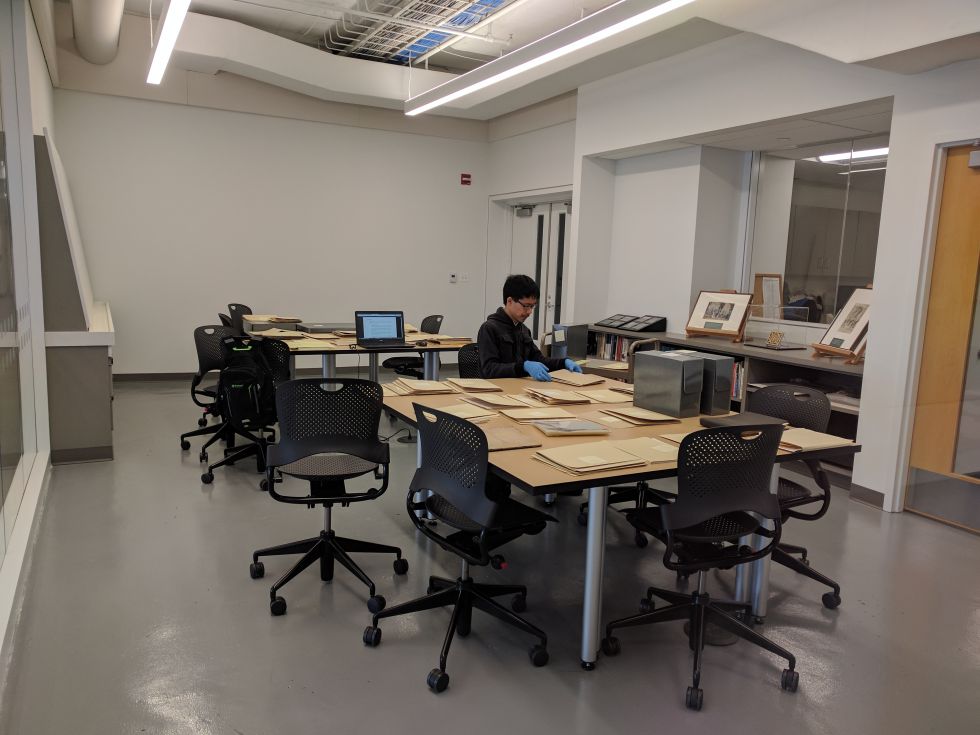
PAFA’s new Center for the Study of the American Artist provides a dedicated study room to act as a classroom for teaching with works of art on paper in PAFA’s permanent collection, a practice that has been fundamental to PAFA since its inception as America’s first fine art school and museum.

The seminar style room provides a setting to encourage art criticism, discussion, and contemplation.

On some occasions, there are a series of framed works that require viewing in their storage location!

20170925_shills

The Center is open to qualified individuals, groups, and classes.

Visits are generally held Monday – Friday during the hours of 10am-4pm, dependent on the availability of staff. We recommend that visitors begin an initial search of PAFA’s collection of works on paper here. For more information, please visit the Study Center. 

IMLS Project Update: PAFA’s New Digital Archive

Contributed by: Hoang Tran, Director of Archives

The Pennsylvania Academy of the Fine Arts’ (PAFA) Dorothy & Kenneth Woodcock Archives is excited to announce the public beta launch of its new online Digital Archives. With the generous support of the Institute of Museum and Library Services (IMLS), the Archives was able to develop a comprehensive plan to digitize and disseminate some of the Archives’ most significant holdings. For the one year pilot project, the Archives selected a high value/high risk collection—the Annual Exhibition Photograph collection—to test and develop proper workflows, guidelines, and best practices.

To increase the searchability and discoverability of digital resources, images were cataloged using widely adopted metadata standards. To ensure we reproduced high quality digital surrogates, we developed a digitization workflow that adhered to national standards and guidelines. The results from the pilot project will help guide future digitization projects.

As the IMLS Grant Project comes to a close, we are happy to announce that we have exceeded the initial goal of the pilot project. This past year, we were able to develop internal guidelines for digitization and cataloging, rehouse 100% of the photograph collection, digitize, catalog and provide free online access to over 3,600 images, and even develop a new online database.

The project is also significant as it provides us the ability to better serve our patrons. We are aware of the changing trends in research methodologies and how scholars have come to expect online access to primary sources. We will use the momentum created by the success of the pilot project to continue developing digitization projects. Please continue to visit the Digital Archives for newly digitized items and collections.

IMLS Project Update: That’s a wrap!

Contributed by: Tess Amram, IMLS Project Archivist

I want to wrap up by extending my thanks to IMLS for the grant that made this project possible. Overall, I’m incredibly proud of the work I did here at PAFA, and there are so many images that I can’t wait to send to people to discuss, once everything is up and running online. (That old adage that ‘everyone has a twin’ is more true than I thought – I’ve lost count of how many double takes I’ve done, thinking the subject of a painting from over a hundred years ago was actually a friend of mine now. Also, there are so many adorable dogs the world deserves to see.)

Even aside from all the technical (that is, marketable) skills I’ve learned, working with these materials has been an object lesson in how small the world can be – for example, the first time I saw the painting “Three Friends,” by Joseph Rodefer DeCamp, was not in installation photographs from the 1912 Annual Exhibition, but hanging in the main library of my alma mater six years ago, dourly watching over thousands of undergrads going about their academic lives. It’s little things like that that were, for me, the most exciting part – those moments of connection between Back Then, and Now.

0b370973058206f6c7c846e678ae0632

“Three Friends,” by Joseph Rodefer DeCamp

Welcome Back Students!

The Center for the Study of the American Artist would like to welcome all new students to PAFA and welcome back all returning students. Whether you are just starting or finishing up, be sure to take advantage of the Center’s services in the year ahead. Much like the amazing PAFA Faculty, the Museum staff are also here to help you grow as artists- whether you want to view a specific piece of art, need research assistance, talk about art, or even learn more about museum career possibilities.

As always, do not hesitate to contact us if you have any questions about our services. We wish you a very successful year ahead.

IMLS Project Update: Lessons Learned (Cataloging and Metadata)

Contributed by: Tess Amram, IMLS Project Archivist

The cataloging and metadata assignation portion of this project was the facet most relevant to my immediate career goals – I’m aiming for a career in cataloging, and I applied for this job in large part because it would expose me to cataloging standards I hadn’t yet had a chance to work with (i.e. standards for materials other than books). I hadn’t had much cause to use the Getty Art & Architecture Thesaurus before now, and I’m grateful for the opportunity to expose myself to controlled vocabulary outside of the Library of Congress Subject Headings (although I wish I had dived into Getty a bit earlier in the process – it would have saved me a lot of nitpicking at the end!).

One of the downsides of cataloging when you love it, I’ve found, is that it’s often difficult to know when to stop. There are a handful of photographs that I was unable to identify, both of gallery installations and of individual works, and it was very, very easy to slip into a Detective Mode Spiral and devote altogether more time than was wise trying to figure it out. Given the fact that most of the artwork depicted in the photographs is of ‘lost art’, it’s entirely possible that I wouldn’t have been able to identify a particular piece no matter what, but for a completionist like me, admitting defeat is quite frustrating.

IMLS Project Update: Lessons Learned (Digitization)

Contributed by: Tess Amram, IMLS Project Archivist

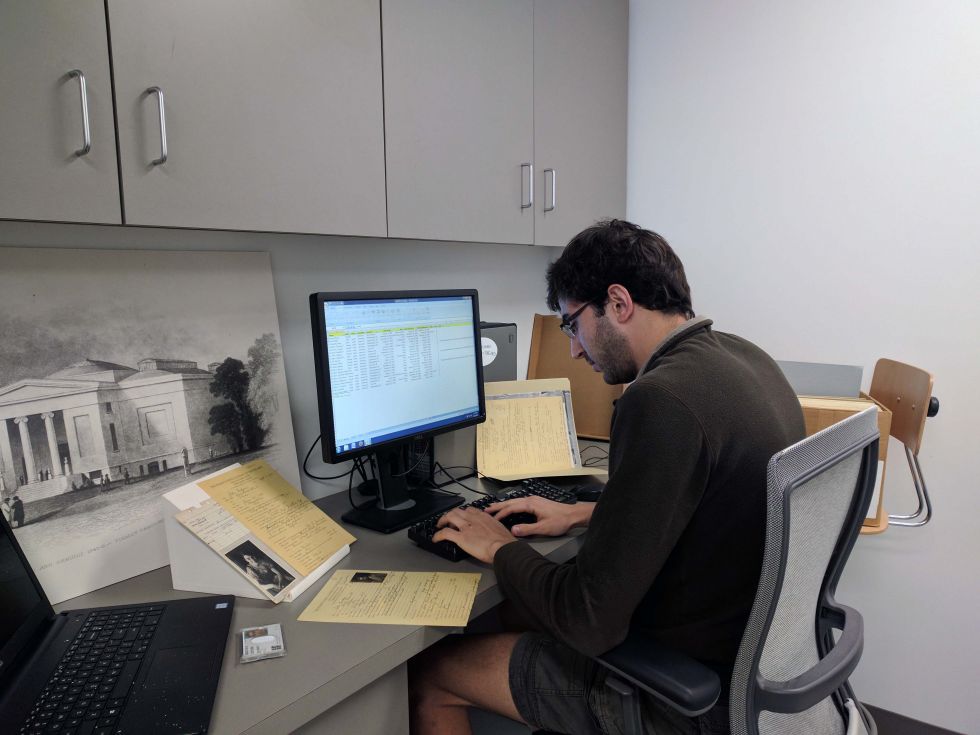
So many lessons learned from this project about digitization! I came into it a complete novice to the practice, and over 3500 images later, I think I’ve got a handle on the basics, at least. I’d only ever used a scanner for text-based documents and the occasional photograph, but I’d never had to scan to archival standards before, so the training I got at the beginning of the project was vital. Understanding the choice of color profiles and dpi to scan with, and Hoang’s explanations of debates among archivists on the topic, definitely helped me get a grasp on what the end result should look like, and what it would be used for.

If I could go back and start it all over again, I would definitely, definitely make sure the scanner was as calibrated as it could be before I got started. The main issue I ran into while digitizing was that of color – although the bulk of the images are black and white, the photographs are very old and most have gone yellow or red with age, whereas the scanner was producing images with a distinct green tinge. This was relatively easy to correct, by adjusting histograms before scanning, or doing a bit of a touch-up in Photoshop afterwards if necessary, but color correction took up a lot of valuable scanning time.

Annual Archivist Conference: ALIKE/DIFFERENT

Contributed by: Hoang Tran, Director of Archives

I had the amazing opportunity to attend the Society of American Archivists’ (SAA) Annual Conference in Portland, OR this year. The conference provided valuable professional development and networking opportunities that all archivists should take advantage of (if you have the opportunity).

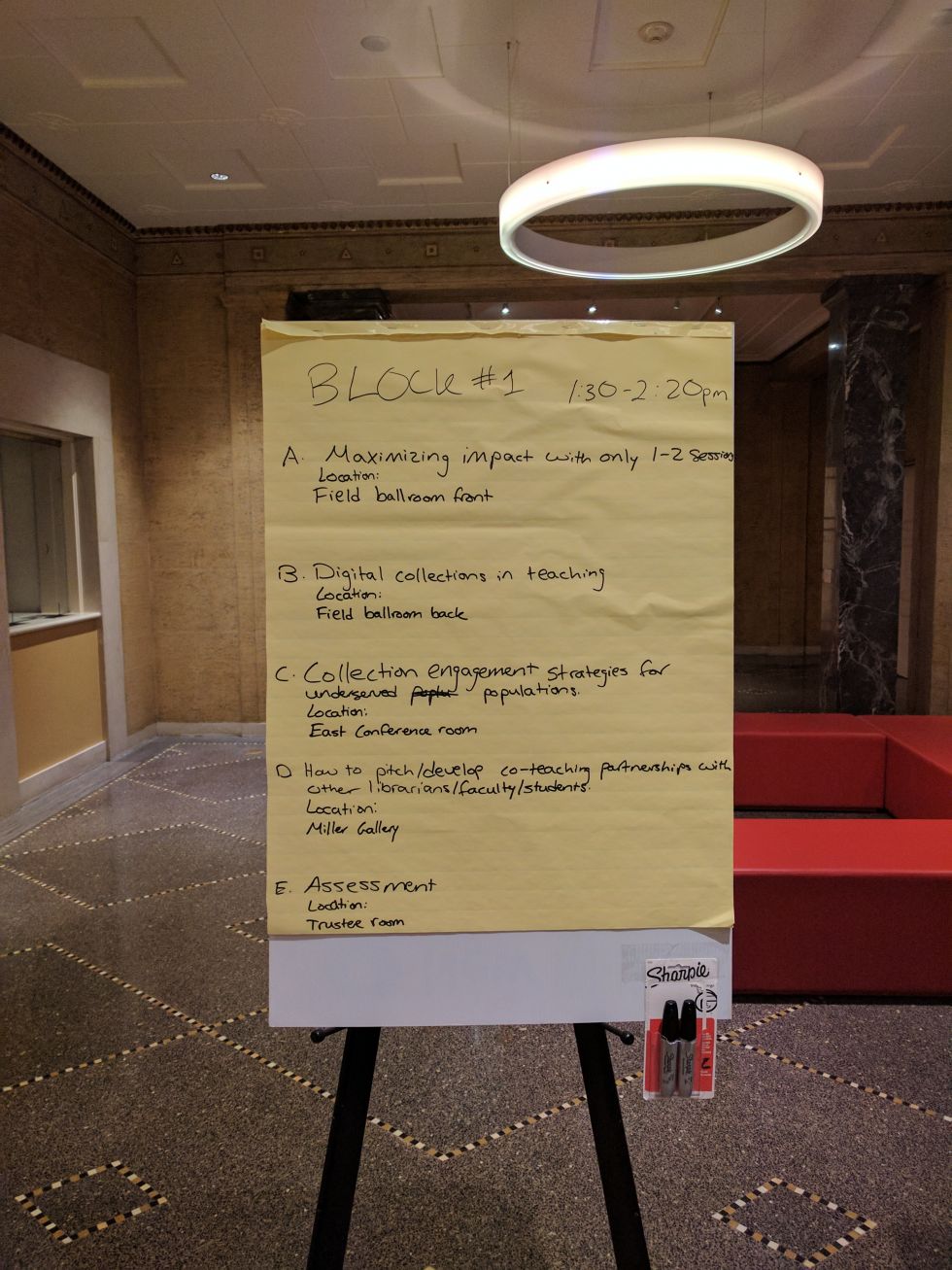
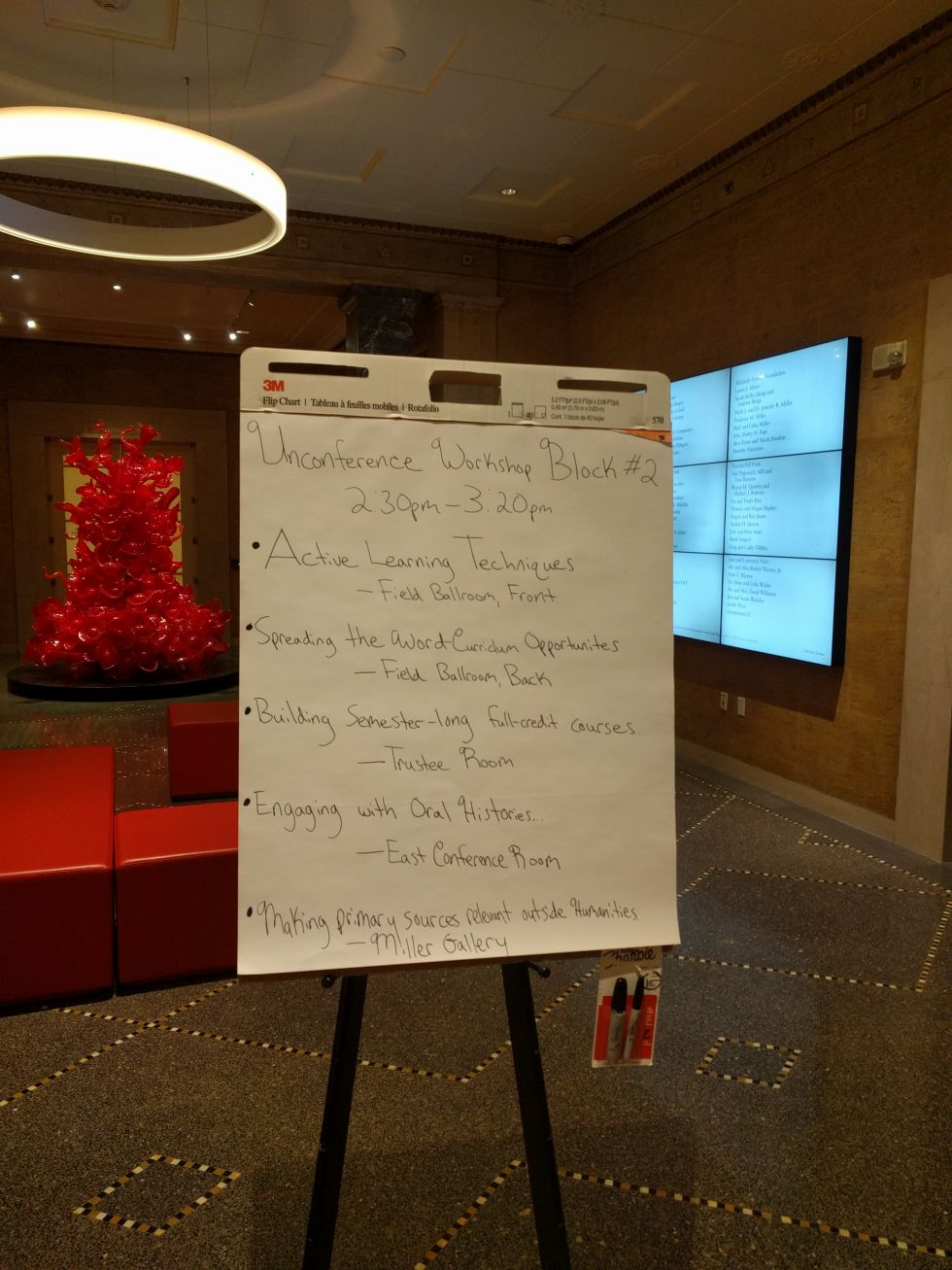
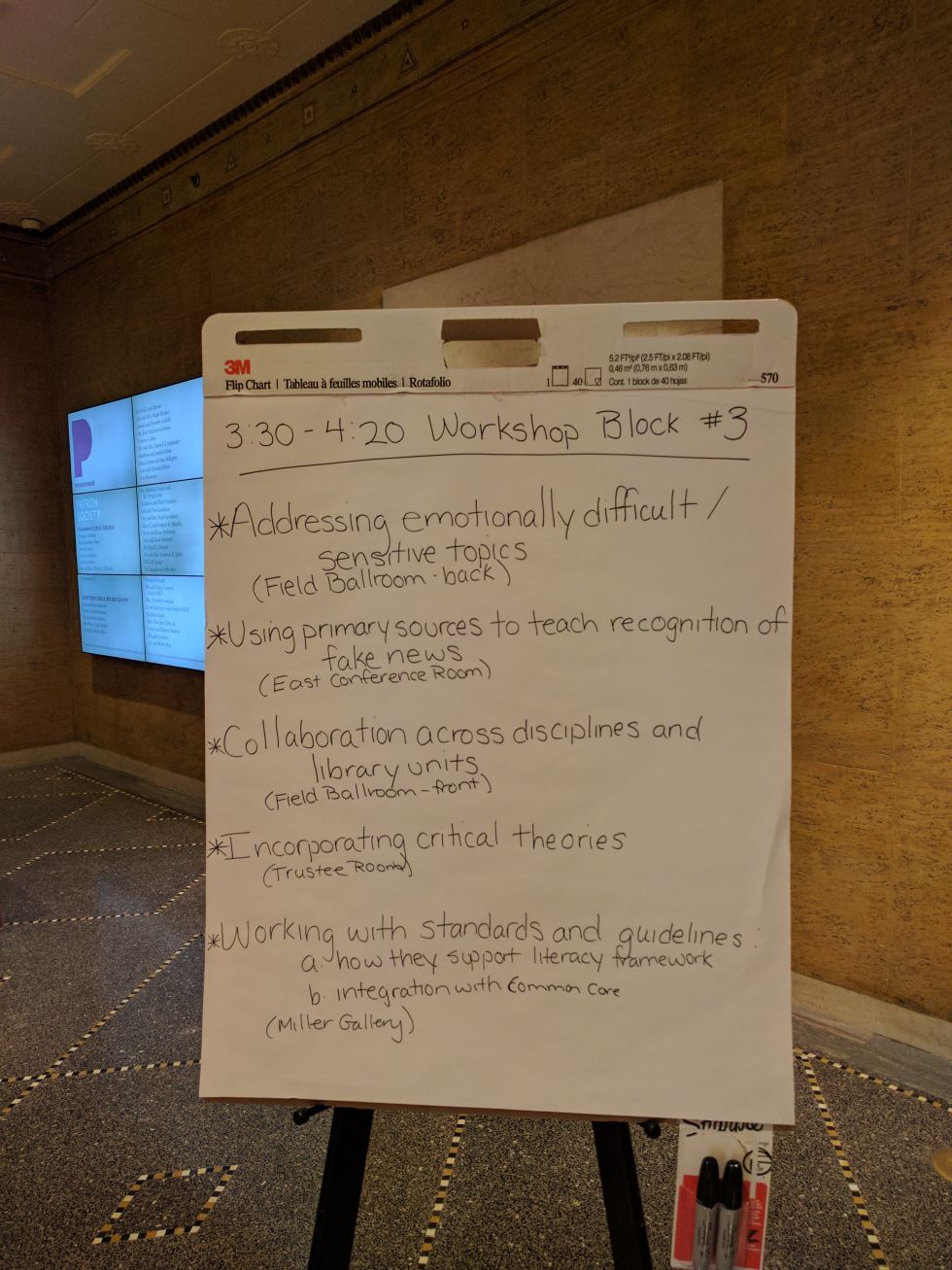
Events such as the Teaching With Primary Sources: “Unconference” was particularly interesting. The all-day event generously hosted by the Portland Art Museum had the theme of “Aligning with Allies.” It was an informative and fun day, featuring a variety of workshops in the morning and an afternoon full of attendee-driven conversations (over 100 professionals attended!) covering all aspects of teaching with primary sources. I definitely learned a lot and I hope to implement some fresh ideas and new knowledge to benefit PAFA’s archives program.

I also had the chance to network with fellow (museum) archivists who shared new ideas and discussed their ongoing projects. One symposium included presentations by MoMa (digital portal for all exhibitions), Detroit Institute of Arts Museum (relocating their archives and restablishing a proper archival program), Solomon R. Guggenheim Museum (archiving email), and the Wisconsin Veterans Museum (digital oral histories).

Intern Spotlight – Leo Wong!

Contributed by: Hoang Tran, Director of Archives

Please welcome Leo Wong!

Leo will be working as the Project Archivist Intern for the recently acquired George Harding Sr. papers. He has a bachelors degree in history from St. Joseph’s University and a graduate degree in public history from La Salle University. Leo has volunteer experience at the Camden County Historical Society working on cataloging and inventorying projects for their audio collection. He has a strong desire to gain more experience on how to process archival collections.

The Center is happy to offer Leo a chance to take a lead on processing an archival collection that includes a variety of records (correspondence, photographs, diaries, sketches, and art) from start to finish. PAFA’s Director of Archives, Hoang Tran, will serve as his mentor during this internship.

Leo hopes to stay in the nonprofit/museum field and continue working on paper and object based collections.

Intern Spotlight – Mustafa Adil Özturk!

Contributed by: Hoang Tran, Director of Archives

Please welcome Mustafa Adil Öztürk (Adil)!

Adil is an MFA student here at PAFA. He has dreams of pursuing a PhD and wanted to gain more experience in the research process. What better way than to research PAFA’s rich history? The archives has a unique collection of student records (not protected by FERPA) that contain a wealth of information. If you examine the the student files separately, they provide rich biographical information and personal insights. Adil will be working on this inventory project for the summer to uncover some of the hidden stories of PAFA students.

Don’t forget to check out Adil’s Instagram to see some of his art!