#Flashback Friday – Alumni Spotlight: Donald Erik Chandler

Contributed by Hoang Tran, Director of Archives

Donald Erik Chandler (1922-2005) was a creative artist who had a long professional career creating some of America’s most iconic characters.

Before becoming an artist, Chandler proudly served in the United States Navy during World War II. After he was honorably discharged on December 18, 1945, he applied to numerous art schools including the Corcoran School of Arts and Design in Washington D.C. and San Francisco State College.

20180420_blog_001
Student academic file for Donald E. Chandler, RG.03.03.02, Pennsylvania Academy of the Fine Arts, Archives

Almost two years after being discharged, Chandler applied to and was granted enrollment to PAFA with the support of the GI Bill. At PAFA, Chandler studied sculpture and went on to win the Stewardson Sculpture Competition Prize in 1949.

20180420_blog_002
Donald E. Chandler’s 1949 Stewardson Sculpture Competition Prize

After completing his training at PAFA, Chandler began his career as a technical illustrator to work on America’s Apollo program. Perhaps Chandler’s most notable and recognizable contribution was actually in the American film industry 25 years after leaving PAFA. His first big break was his 25 foot sculpture of a great white shark for the 1975 Steven Spielberg film Jaws. The following year, Chandler with a team of sculptors created a 40 foot tall King Kong sculpture used in the film. Other pop culture characters include his assistance on creating the Pillsbury Doughboy and characters for McDonalds–the Hamburglar, Grimmace, Mayor McCheese, Officer Big Mac, Captain Crook, the Fry Guys and the Hamburger Patch.

After Chandler’s death in 2005, his family made a contribution to name a school studio in honor of his memory. Even after all these years, his legacy still lives on here at PAFA in studio #1018. Thadius Taylor, a BFA + Certificate student is currently using the space to create art.

Don Chandler’s second cousin, Jeff Chandler, reached out to PAFA’s archives a few years ago to start the research process of compiling Chandler’s biographical information. Jeff recently published a short story about the artist’s personal and professional life and donated a copy of the book to the archives. Those interested in reading the book should contact the archives or you can access the digital copy here.

Museum Techniques – Transporting Art

Contributed by Hoang Tran, Director of Archives

Continuing the blog series on museum techniques, today’s topic is about housing and the transportation of art.

It all started a few months ago when three curators from the Library Company of Philadelphia visited the Center to conduct research on their upcoming exhibition, William Birch, Ingenious Artist opening May 1, 2018.

20180416_blog_005

The curators examined some of PAFA’s William Russell Birch miniatures and selected the ones they wished to loan for their exhibition. It is hard to tell from the above image, but if you look closely, the original housing of the miniatures were simple archival boxes. This type of housing is fine for long-term storage, but inadequate for transportation. Although the Library Company is located only 8 blocks away from PAFA, transporting such fragile works is still challenging.

The loan of the objects provided an opportunity to create new custom housing for the miniatures. Not only would the project make transporting the objects safer, but the new enclosures will ensure the objects are well preserved once they are returned to PAFA for long-term storage.

Creating the custom enclosures required some thought and a lot of patience. Liz McDermott, PAFA’s Conservation Technician, had to pay special attention to how other people would handle the materials during the multiple phases of the exhibition–transportation, installation and deinstallation, repackaging, and delivery.

Features include separate lift tabs for easy access, Tyvek lining to prevent abrasion, and ethafoam and volara foam to absorb shock and create a sturdy environment within the box. While it is impractical to create custom enclosures for all of works of art, in this particular case, it was a great opportunity for me to upgrade the housing for these amazing works of art.

New Digital Collection – Annual Watercolor Exhibition photograph collection

Contributed by Hoang Tran, Director of Archives

The Dorothy and Kenneth Woodcock Archives is happy to announce that the Pennsylvania Academy of the Fine Arts’ Annual Watercolor Exhibition photograph collection has been digitized and available online on PAFA’s Digital Archives.

b779608e4b596399aa5578f6f34af77d
[Installation photograph of the 8th Annual Water Color Exhibition, 1910]
Until 1903 the annual exhibitions included oils, watercolors, prints, drawings, and sculpture. In 1904 watercolors, prints, and drawings were segregated into a separate annual exhibition. The annual exhibitions of watercolors, prints, and drawings were cosponsored by the Philadelphia Watercolor Club and the Pennsylvania Society of Miniature Painters. Thus, from 1904 to 1953, the Academy mounted two annual exhibitions.

Print Nation – Printing Your Protest

Contributed by Hoang Tran, Director of Archives

PAFA recently acquired a new suite of Guerrilla Girls posters. The posters are widely known for their poignant, surprising and often funny projects unpacking and bringing to light gender inequities in the art world for the last three decades. Upon hearing about this new acquisition,  Print Nation, PAFA’s student-run printmaking group quickly made an appointment with the Center for the Study of the American Artist to view some of these posters up close. We were happy to host the group.


Print Nation members were using the posters as inspiration for their upcoming event, Guerrilla Warfare: Screen Printing Your Protest on April 8, 2018. More information about the event can be found here.

Don’t forget to check out some of the works by the members of Print Nation.


America’s First Academy

Contributed by Liz McDermott, Conservation Technician

PAFA’s Richard C. von Hess Foundation Works of Art on Paper Conservation Studio is a dedicated space used to perform important preservation and exhibition related activities. From properly housing works of art on paper for storage to preparing works for exhibitions and loans, the Conservation Studio plays a vital role in supporting PAFA’s mission.

In preparation of PAFA’s upcoming exhibition, First Academies, the museum will put on display its most important document—the original 1805 Charter. Placing the charter on view highlights one theme of the exhibition—the founding of the first Academies in England (The Royal Academy of the Arts, established 1768) and the United States (The Pennsylvania Academy of the Fine Arts, established 1805). Signed inside Independence Hall on December 26, 1805, the PAFA Charter is an important piece of history not only for PAFA, but for America as well. Framing the document required the utmost care.

The Charter is written on parchment. True parchment is an animal skin which has been treated, stretched, and scraped to create a durable and long-lasting surface for writing and drawing. Parchment is hygroscopic in nature, which means that it absorbs water very readily. This causes parchment to swell in conditions of high Relative Humidity (RH). Conversely, if the RH is too low, parchment will shrink and potentially even crack. Constant fluctuations in temperature and humidity can also degrade the parchment through processes that affect the collagen and lipids in the material. This vulnerability of true parchment to unstable climate conditions made framing the PAFA Charter a welcome challenge. After hours of planning, research, and consultations with colleagues in the art conservation field, it was decided to use the methods illustrated below:

20180227_blog_001

First, perimeter hinges were adhered on the verso of the Charter about 4” apart. The above picture shows the process. Japanese tissue hinges were adhered and weighted using a very dry wheat starch paste. The ends of the Japanese tissue were frayed and overlap the parchment no more than 1/8” to ensure easy and safe reversal by future conservators.

20180227_blog_002

Once the perimeter hinges were adhered, the Charter was positioned into the book mat for mounting. Notice which hinges have been adhered first—like stretching a canvas (but in this case much gentler), the hinges were first attached at the center, then moving opposite and outward, the hinges were attached one by one to create even gentle tension throughout the Charter.

20180227_blog_003

Here is the Charter after mounting (photo by Barbara Katus). Notice the toned Japanese tissue paper at the top and bottom right. This was to disguise the bright white backing mat while on view since the window mat was constructed with a substantial gap to allow freedom of movement inside of the framed package.

Next, a sealed package was constructed to maintain the parchment at an optimum RH during transport and within the gallery environment for up to a year. This technique was developed by Hugh Phibbs, former Coordinator of Preservation Services at the National Gallery of Art in Washington, DC.

20180227_blog_004

The UV- filtering, non-glare plexi glazing was first placed over the mounted and matted Charter and weighted down to prevent movement. Marvelseal 360, a puncture resistant, aluminized polyethylene and nylon barrier film (used for packaging space food!!), was cut to a larger size than needed, and the Charter was placed inside. Next, a specialized double sided tape for museum housing was placed around the perimeter to hold everything together for the next stage.

20180227_blog_005

Using a tacking iron, the Marvelseal was heated around the perimeter. This completely sealed the package to prevent water vapor from leaving or entering the framed micro environment during climate fluctuations—hence the term “sealed package!” Some sealed packages have even been found to withstand flooding, and were found floating amongst the damage.

20180227_blog_006

Next the edges of the Marvelseal were trimmed so that they can’t be seen beneath the rabbet of the frame while on view.

20180227_blog_007

Here is the PAFA Charter fit into its new frame, ready to be enjoyed by our PAFA audience!

Be sure to come and check out First Academies, on view at PAFA from March 2nd – June 3rd in PAFA’s Historic Landmark Building!

Connecting Teachers with Primary Sources (and art)!

Contributed by Hoang Tran, Director of Archives

One of the archives’ primary function is providing scholars access to PAFA’s extensive collections of primary sources. Primary sources are firsthand evidence of historical events. They are generally unpublished materials such as manuscripts, photographs, maps, artifacts, audio and video recordings, oral histories, postcards, or posters. In some instances, published materials can also be viewed as primary materials for the period in which they were written

In collaboration with PAFA’s Museum Education Department, the Center for the Study of the American Artist helped host one portion of a day long professional development workshop connecting art teachers with primary sources that can support classroom topics and promotes the effective use of PAFA’s resources.

The teachers examined works by George Harding, Elizabeth Osborne, Eadweard Muybridge, and Thomas Eakins in our study room. The workshop also included a behind the scenes tour of PAFA’s Works of Art on Paper Storage facility.

For more information on how to schedule classes at the Center for the Study of the American Arist, please visit our website. 

Customized professional development opportunities are available  through the School of Fine Arts (eowens@pafa.org) and Museum Education (csamson@pafa.org) with ACT 48 and New Jersey credits.

New Digital Collection – Pennsylvania Society of Miniature Painters’ Annual Miniature Exhibition photograph collection

Contributed by Hoang Tran, Director of Archives

The Dorothy and Kenneth Woodcock Archives is happy to announce that the Pennsylvania Society of Miniature Painters’ Annual Miniature Exhibition photograph collection has been digitized and available online on PAFA’s Digital Archives.

e7d60387632fa48b1fb0fb9f37185de5
[Installation photograph at the Pennsylvania Society of Miniature Painters’ Annual Miniature Exhibition, undated]
Until 1903 the annual exhibitions included oils, watercolors, prints, drawings, and sculpture. In 1904 watercolors, prints, and drawings were segregated into a separate annual exhibition, which also featured the annual display of the Pennsylvania Society of Miniature Painters. Thus, from 1904 to 1953, the Academy mounted two annual exhibitions.

New Year, New Acquisitions!

Contributed by Alexander Till, Associate Registrar

The Pennsylvania Academy of the Fine Art’s collection, which includes artworks in various media—from painting and sculpture to media art arts and photographs—reveals key aspects of America’s rich artistic history. In recent years, the museum has made a concerted effort to build its collection by acquiring works by underrepresented artists.

20180111_blog_001
Brooke Davis Anderson, Edna S. Tuttleman Director of the Museum, along with Barbara Katus, Manager of Imaging Services, marveling over recently acquired Violet Oakley charcoal drawings.

These works will need some conservation before they will be ready to be exhibited.

20180111_blog_002


Before works of art can enter storage, they need to be cataloged and properly housed. Jennifer Johns, Senior Registrar, and myself work with Liz McDermott to remove the artwork from its shipping container. The works came in rolled and we needed to lay them out to flatten them.

20180111_blog_003

Our work-study student, Sami Russels helping me unpack a new acquisition.


We’re also very excited to announce that PAFA has recently acquired 278 sculptures by 20th century African American artist John Rhoden. We won’t be keeping all works, but we will help broker the rest of the collection for other institutions! Read more here.

New Digital Collection – Eadweard Muybridge’s Animal Locomotion study

Contributed by Hoang Tran, Director of Archives, and Barbara Katus, Manager of Imaging Services

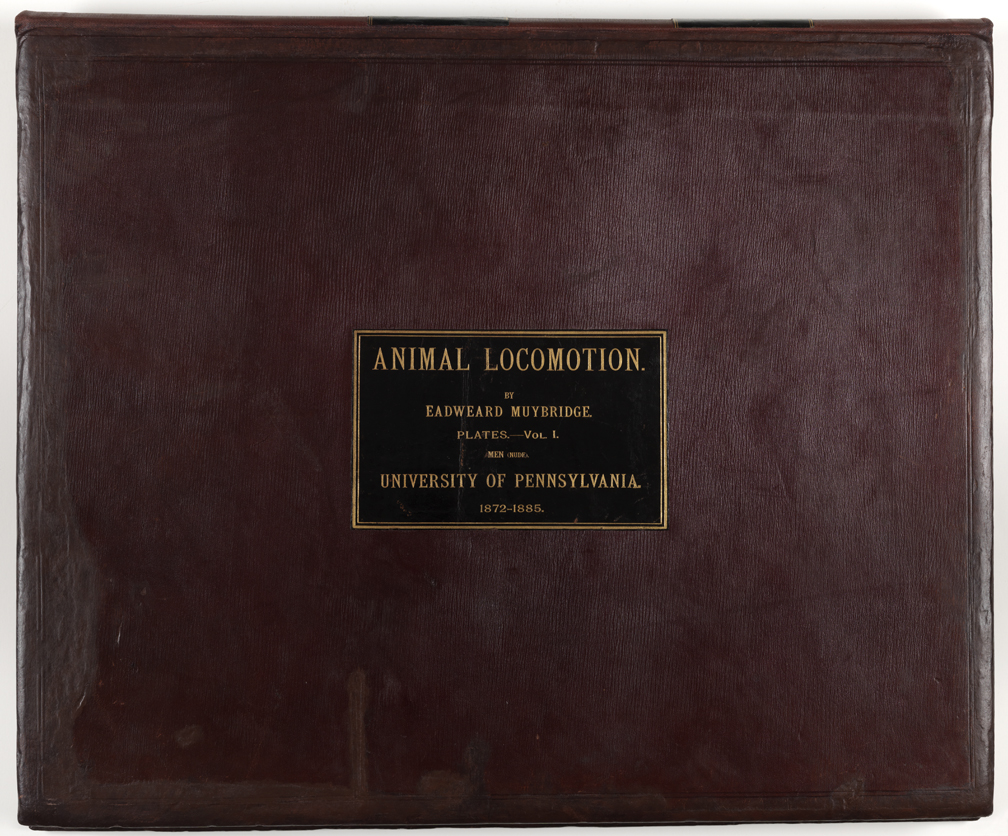
Eadweard Muybridge (1830-1904) was an English photographer who is considered the father of motion picture because of his photographic studies of animal motion. His pivotal work in the development and evolution of motion picture began in 1872. Muybridge was hired by Leland Stanford, the California governor and founder of Stanford University, to settle a debate regarding whether a horse had all its hooves off the ground simultaneously or not. For six years, Muybridge used photography to figure out the answer to the question. All his work led to success in 1878 when he setup 12 cameras along a racetrack to photograph a galloping horse. The photographs proved that there is a point when no hooves touch the ground during the horse’s stride.

Muybridge’s connection to PAFA began when PAFA’s board member Fairman Rogers and art faculty member Thomas Eakins corresponded with Muybridge about his Stanford photograph project. In 1883, Rogers invited Muybridge to give a lecture at the Academy. On February 12, 1883, Muybridge lectured on The Romance and Realities of Animal Locomotion, illustrated by the Zoopraxiscope at PAFA. Muybridge eventually relocated to Philadelphia and continued his work on his landmark study on animal locomotion.

Under the auspices of the University of Pennsylvania, Muybridge eventually published 12 volumes that illustrated animal locomotion in 781 plates. Fairman Rogers who was an alumnus of the University of Pennsylvania and co-founder of the School of Veterinary Medicine, professor of civil engineering acquired a set of Muybridge’s 12 volumes. In 1887, Rogers donated the volumes to PAFA’s library.

20180222_blog_001

128 years after Rogers’ donation, the volumes required much needed conservation to be usable again. PAFA was fortunate enough to receive grant funding from the Institute of Museum and Library Services (IMLS) to support the conservation of all 12 volumes. After conservation, the volumes were all digitized in-house. The volumes are now freely accessible online.

To view all 12 volumes, please visit PAFA’s Digital Archives here.

Happy Holidays!

Contributed by Hoang Tran, Director of Archives

On behalf of the Museum Team, we wish everyone a very happy holiday season! This past week, PAFA staff and faculty came together for our annual holiday party celebrating over food, music, and prizes!

holiday004

Three members of the museum team (Mark Knobelsdorf, Barbara Katus, and myself) were among the raffle prize winners!

20171207_blog_001
Barbara Katus and I designed and constructed a PAFA gingerbread house. It includes flying buttresses, mosaic tile entry, and custom icing roof.

We want to thank everyone for their continued support. Happy Holidays!